
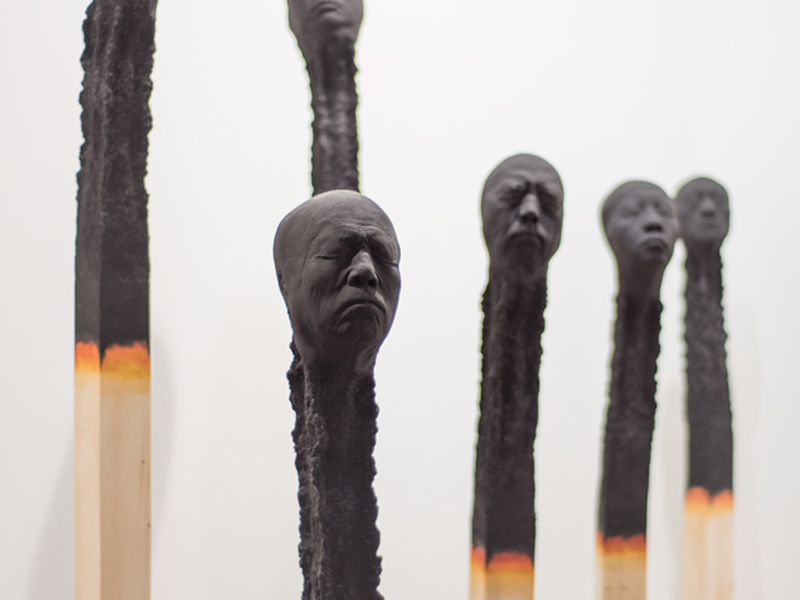
“But I persisted. I slid through every trap like I had saints in my pocket. I was, in effect, a miracle.” The story of Slippery Fox which displays the value of hard work and preparation, especially when living a life of crime…

by: Albert Rodríguez
You may call me Slippery Fox. A ridiculous name, of course, like something from a third-rate thriller. I didn’t choose it. It was a nickname bestowed and sustained over the years by journalists, detectives, and patrol officers who believed — some perhaps grudgingly, others admiringly — that they were encountering a mind uniquely attuned to subversion. The moniker suited their fictions. The press longed to novelize me. The police, ever careerist, hungered for a scalp, a prize to present at annual banquets and disciplinary hearings. But for more than four decades, I managed, quietly and improbably, to elude them.
In this game I wasn’t supposed to last. I was an anomaly. Most practitioners of my trade age out abruptly — shot, jailed, betrayed, dead from bad judgment, or worse luck. But I persisted. I slid through every trap like I had saints in my pocket. I was, in effect, a miracle.
Unlike others, I never romanticized violence. I bore no real firearms. I spilled no blood. My trajectory was less cinematic than infrastructural. I understood systems. I appreciated their vulnerabilities, the fault lines in a jurisdiction, the blind spots of bureaucracy. I was, by all measurable accounts, very good at what I did. In the end, I successfully robbed 507 banks.
But, I am getting ahead of myself.
I probably developed my Robin Hood mentality early on in life. My mother, Sara — beautiful, tireless, heartbreakingly mortal — was a nurse and, by necessity, a solitary parent. No husband in sight. She raised us in modest, sometimes precarious circumstances. But she was the hardest working person I ever knew. She was everything to us. She fed us, prayed over us, stood tall in a world that tried to bend her low. Her two boys were a handful, but we were happy together.
We owned a small house, paid for with triple shifts and iron discipline. Then she got sick. Then sicker. The banks sent letters, cold and thin as knives. We lost the house. On Palm Sunday she died. Our little family was scattered to the wind.
I lived, after that, in a state of quiet rage, like a wire about to pop. For a while I tried the official routes — school, protest, petty politics. For a moment I thought the Occupy Wall Street movement would flip the script and change the world. All the usual hopes of youth. But those, too, dissolved.
A couple of the big names in the movement got bought out. That is how it goes with mortals, you sing the right notes — greed, vanity, fear — the human soul crumbles. One cannot blame the idealist who finds a better price. People break. That’s what they do. The machine doesn’t even gotta try that hard. Capitalism pulls everything down eventually. The system exerts a logic that is difficult to escape. In its final form it resembles not an economy but a kind of elaborate joke.
I studied economics briefly. The more I learned, the more I realized that the financial world was a theater of the grotesque. A bloodsport for people with suits. And behind every spreadsheet? A punchline. And the joke? It was always on us.
My disillusionment metastasized. I drifted. One day, I was in a movie theater with a hot Colombian girl from Queens. I remember that it was a heist film. She turned to me and said, “You kind of look like the lead.” I don’t remember the film’s name. But the idea, once planted, germinated.
I took to my work slowly. I learned how to watch while staying invisible. Little by little, I turned into a sly-fox on the prowl. I studied terrain, the backroads, the whole game, strategy, counter-surveillance. New Jersey, with its highways and under-policed woodlands, offered opportunity. The cops, bless them, were urban creatures, ill-equipped for underbrush or darkness. I developed an arsenal of tactics. I maintained a covert automotive paint shop. I employed bicycles, dirt bikes, box trucks. My greatest feat was an underground bunker — six feet deep, buried alone. It was a marvel of low-budget engineering.
The trick, of course, is not bravado but discipline. Simplicity. A certain stoic restraint. No allies. No dramatics. The smallest of miscalculations — a footprint, a license plate, a loose end — could unravel years of effort. I cultivated a kind of asceticism. Straight-up monk-level discipline.
I figured it out pretty early that if you didn’t want to get caught, you had to treat the game like science. For this reason, I restricted my operations to the suburbs, preferably during the winter months, when the sun, in its brevity, left everything coated in a dim grey stillness that suited my purposes. Fridays were my go-to, not ’cause I gave a damn about TGIF or whatever, but because I knew the system. I understood the structural vulnerability. Police departments, particularly in smaller municipalities, shifted personnel during that window. The disorganization was palpable. Bank employees, meanwhile, tended toward distraction, eager to return to their families, their dinners, their weekends. In such moments, human beings display a profound desire to look away.
I understood this, and I exploited it.
By operating outside densely populated areas, I imposed a logistical strain on local police departments, which were never adequately staffed or equipped to pursue me over large and often rugged terrain. The night vision goggles, military grade, were always retrieved from a predetermined location, a kind of modest ritual I had developed. Combined with a dirt bike, which was tuned, stripped of excess weight, and well-maintained, I could effectively vanish. Not metaphorically. Actually vanish.
Still, topographical knowledge was essential. The irony here, I suppose, is that one can only disappear by becoming, first, deeply acquainted. With trails, rivers, lakes, elevation changes, blind corners. I walked and rewalked these areas, performed dry runs, and tested response times. From this emerged a detailed catalogue of vulnerabilities: intersections with poor sight lines, loose gravel patches, awkward grade changes — each noted. Each studied.
I always worked alone. Not because I hated people, though I often didn’t care for them, but because in this line of work, to rely on another person is tantamount to inviting collapse. Criminals, believe or not, talk too much, and by their very nature are unreliable, something that sounds tautological until one witnesses it firsthand.
I took notes. Meticulously. I read voraciously: technical manuals, behavioral psychology, tactical strategy, detective fiction. (Yes, Jack Reacher. It would be dishonest to omit that.) I read law enforcement journals and watched police procedure videos. I followed the forums. I frequented corners of the dark web not because I found them interesting, but because I understood that they must be monitored, like weather systems before a sea voyage. One cannot afford sentimentality or distraction. One must remain mentally awake.
This, I believe, was the essence of my method: discipline, observation, a relentless refusal to submit to error. I approached the work with the same seriousness one might bring to the study of jurisprudence or medicine. Not out of pride. Simply because I had no other choice.
Inside the bank, my approach diverged from this restraint. There, I embraced a kind of choreographed chaos. I had no talent for the passive strategy of quietly slipping a note across the counter. That mode of communication seemed, to me, almost absurd. Instead, I opted for spectacle, if not violence, then at least a violent interruption of the norm. The intention was not cruelty, but clarity. A demonstration of dominance, of certainty. People, when confronted with certainty, tend to submit.
Psychological pressure, if applied correctly, is more reliable than brute force. Rage, in this context, was not a flaw in my character but a kind of inner furnace I had learned to stoke and control, much as a conductor might command an orchestra. It had its place. And I was, after all, a professional.
But by day I was a quiet accountant, inconspicuous by design. The sort of man whose face you forget moments after seeing it. This, naturally, suited my purposes. The disparity between what I did by daylight and what I did after dark was so stark, so unbridgeable, that it rendered me, in effect, invisible.
My wife, who had inherited a rational optimism from her Episcopalian upbringing, was under the impression that our steady accumulation of wealth could be traced to my preternatural skill at picking stocks. I did nothing to disabuse her of this. In a way, it wasn’t untrue. I was investing. The returns were simply of a different nature.
With the proceeds, I furnished my children with a version of childhood so complete, that I sometimes wondered if I’d overdone it. We lived on a picture-book farm in rural New Jersey — verdant, bounded by old stone walls, populated by chickens and ducks and honking, indignant geese. There was a vegetable garden which I had landscaped, initially, for aesthetic reasons, but which had evolved into a kind of ideological insurance policy. The cow, Daisy — an actual Jersey cow — became an un-ironic emblem of the life I’d made. And the dogs and cats, inexplicably friendly to one another, served as further proof that harmony was possible, if engineered with care.
I was not ashamed of any of this. I still am not. My mother, may she rest, would have struggled to recognize the man I became, but I like to think she would have understood the impulse. The need to secure a perimeter. To defend one’s own.
By every public measure, life was good. Too good. We owned property — handsome holdings in Easton, Allentown, and Philadelphia — handled with competence by a management company. Rent came in smoothly, like clockwork. Every month, like a quiet blessing.
Meanwhile, our Vanguard account was performing robustly. I monitored it like a botanist tending to saplings. One eye on the long game. The idea wasn’t just to protect my children. It was to protect their children, and the children of those children. Individuals whose lives remained theoretical, curled up, dormant, in the reproductive futures of my sons and daughters. This vision — slightly absurd, faintly mystical — nonetheless anchored me. It gave the whole thing its strange, moral contour.
There are worse things to want in life than to build a little peace. A little haven. We had, in short, an Eden — an enclave against the tremors of the world. But Eden, alas, is an unstable construct. And so, the tremors began. Doubts. Little heart stutters. Panic attacks. The grotesque possibility that I might be caught. They were small at first, like the twitch of a dying wasp’s wing — those insidious premonitions of collapse. The panic attacks arrived like rude telegrams from the subconscious, bearing bad news in a language only the heart could read. There were nights when I stood at the bedroom window, the moon blanching my face, and contemplated the grotesque possibility of capture. Not for my sake — though the thought of prison filled me with dread — but for the children. That their paradise might be soiled by scandal. What happens when people whisper your last name like it’s a curse? That was the horror.
One night, with nothing particular in mind, we watched The Passion of the Christ. I had no great yearning for its message — my interest was only in the director’s craft — but there it was. Caviezel, battered and blinking beneath the weight of the cross. He turned to his mother and said, “See mother, I make all things new.” And in that moment something lodged deep inside me seemed to stir. Not repentance exactly, but recognition. A hairline fracture widened. A splinter shifted. The quiet suggestion that even the most carefully constructed worlds can’t withstand the weight of their own silence.
And from there, dear reader, a kind of music began to play.
We began attending church. My wife’s denomination. I found, to my surprise, a sense of calm there. The singing, the weird beauty of the rituals, the shared illusions of permanence. I even began to admire the figure of Christ — not as deity, but as a kind of moral insurgent.
I kept robbing banks. Habit, you understand. But with less conviction. Like muscle memory instead of purpose.
Then came the car accident. My wife’s car. Crumpled like a soda can. My wife, broken but salvageable. She lived, thank God. Broken bones, bruised lungs, but she lived. And me, making a bargain — childish, desperate — with God. Spare her, I said. I’ll quit. I’ll give half away. I’ll turn my sin into service. I’ll be better.
And so I did. I tried to turn virtue into practice. I told myself that my criminal career had been pragmatic, not pathological. I had never glorified it. It was merely…adaptive.
But fate is rarely so courteous.
Some kids out in the woods stumbled on the exhaust pipe from my buried container. They called the police. The police called the FBI. And the FBI, that most narrative-minded of agencies, knew exactly what they were looking at.
They arrested me in Times Square, which I must admit was poetic. My wife and I had just left a show. We were heading to dinner. The men in suits asked me to lie on the ground. My wife — bewildered, luminous — looked down at me and asked, in a voice I will never forget, “What’s going on, hun?”
I had no good answer.
Albert Rodríguez is an emerging writer based in Brooklyn, New York. A graduate of Borough of Manhattan Community College, his fiction has appeared in Five on the Fifth, White Wall Review, Platform Review, BULL, Modern Literature, INK Pantry, Literally Stories, Active Muse, The Rye Whiskey Review, The Fictional Café, Yellow Mama, The Piker Press, and other journals. He is currently at work on his first novel.




Wow this is great
I need more! This was so captivating—I couldn’t stop reading. Dangerously fun story.