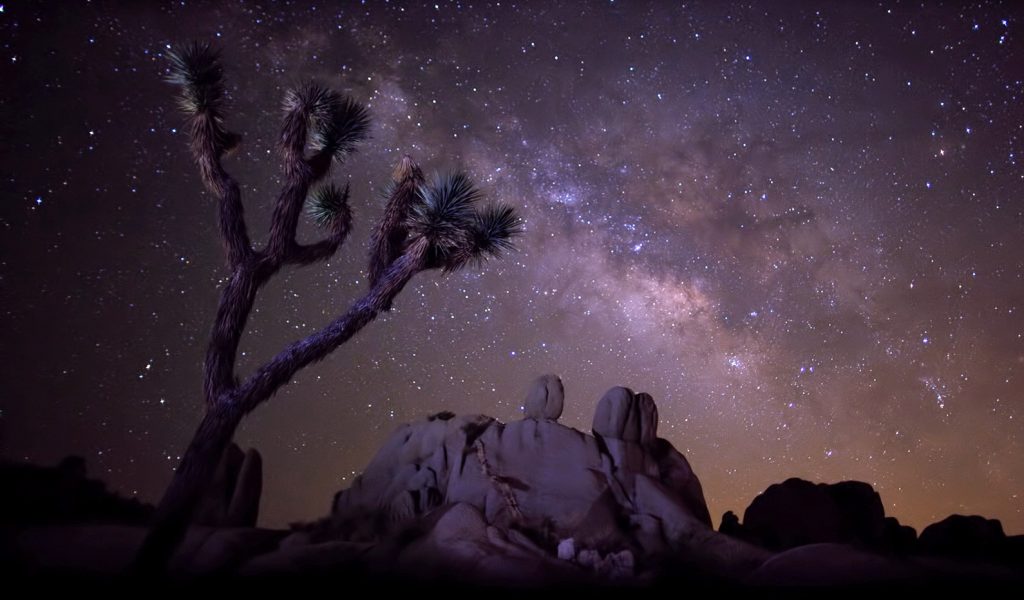
A work of fiction where a famed scientist promptly discovers that iife as a trail-blazing space explorer isn’t all it’s cracked up to be…

by: James Hanna
When NASA shipped the first colonists to Mars, Phineas Ford was among them. Since Phineas was ninety years old at the time, this may not have been a wise decision. But how could Man’s maiden venture to become a two-planet species not include an astronomer of Phineas’ unrivaled achievements? It was Phineas who had built a telescope of such incredible power that he had discovered galaxies previously unknown to man. It was Phineas who chronicled thousands of planets orbiting distant stars and had even succeeded in contacting extraterrestrial life. And it was Phineas who spotted a black hole whose pull exceeded the speed of light and proposed that this suction could increase the rate at which Man might travel through space. So, Phineas’ observatory was shipped to Mars on the first of the cargo ships, and Phineas followed ten months later on the ship carrying the colonists. Given Mars’ thin atmosphere and unpolluted sky, who’s to say what new marvels Phineas might discover?
Six months after the colonists left on their mission to colonize Mars, they arrived on the warrior planet where their equipment awaited them. They worked with the singularity of ants and, after only a year, these brave men and women had established a firm foothold on Martian soil. The base consisted of a network of caverns dug beneath the ground and an aerogel dome that provided the colonists a garden in which to stroll. NASA named the colony Ares after Zeus’ most daring son, a name that denoted endurance, courage, and control of the elements. The base was such a proud achievement that NASA boldly claimed that, one day, domes would cover Mars like mushrooms after a rain.
And what was Phineas doing while all this was taking place? At times, he was seen in his observatory, where he was often asleep. On other occasions, he was seen playing solitaire in the underground kitchenette. And sometimes, he was spotted in the garden that graced the transparent dome, watching the Martian desert as though waiting for a bus to arrive. Sadly, it looked like Phineas had lost his inspiration and had fallen into a sulk that he was unable to shake.
After a year, most of the colonists were rotated back to Earth, and Phineas was brought back with them despite having done no work. So, when interviewed by reporters at the National Air and Space Museum, Phineas offered no new revelations and looked like a ghost at a feast. Depleted by the weak Martian gravity, Phineas could barely stand, and he clutched the lectern like a drowning man holding onto a raft.
“Tell us,” the reporters clamored. “How was your year on Mars?”
“Ahem, ahem,” said Phineas, and his voice was drier than lint. “I have reached the conclusion that Ares is a rather godless place.”
“How can that be?” one reporter cried. “Man is reaching for the stars.”
“There’s nothing divine about Ares,” said Phineas, and he frowned like an angry troll. “The ventilation system groaned so loudly I could hardly think at all, and that evil dust was everywhere no matter how often I swept. And the rutting — ooooh, the rutting. Folks were rutting everywhere. They were rutting in the airshafts, they were rutting in the halls, they were rutting in the garden once the sun had disappeared. If Man is assailing the heavens, I must say his methods fall short of his goal. I can assure you that Ares is no place for a Christian soul.”
“Was the garden a consolation?” a second reporter asked. “According to our information, you spent some time in it.”
“The garden was nice enough,” Phineas said, “when no one was rutting there. But, five times, I asked our botanists to plant some snapdragons in it. Snapdragons are my favorite flower, but did they ever plant snapdragons? No. They planted plenty of coconut palms, date palms, and jacarandas. They planted potatoes and lentils and sunflowers as high as could be. But, five times, I asked for snapdragons, but did they plant any snapdragons? Nope.”
“How unfortunate,” a third reporter said, “but tell me, Mister Ford, did the proximity in which the colonists lived gain you any friends? Surely, there was somebody there that you weren’t so eager to scold.”
“Friendships — pah!” snapped Phineas. “Let me tell you what close quarters do. On Sundays, I permit myself a glass of Cabernet Sauvignon. I had six bottles left by the time we excavated the ground, so I stored them in one of the pantries with a sign that read, ‘Property of Phineas Ford.’
“One Sunday, when I poured myself my glass of Sauvignon, I noticed its taste was lacking although the level in the bottle had not dropped. Would you believe it? I said to myself as I took a conclusive sip. Somebody in this colony is watering my wine.”
“So, did that discourage you from friendships?” the same reporter asked.
Phineas repeated, “Friendship — pah. How could I make any friends when I didn’t know which of those atheists was watering down my wine?”
The reporter said, “I’m sorry you found Mars to be such an ordeal.”
“Let me tell you something else,” Phineas said, “so you’ll know how bad it was. Now on the morning of my ninety-first birthday, I decided to order a pizza. It’s my habit to celebrate each passing year with a cheese and mushroom pizza. So, I radioed Domino’s Pizza on Earth and gave them my usual order, and do you know how long it took for that pizza to arrive?”
“Six months?” the reporter ventured.
“Six months!” Phineas cried. “By the time it arrived, it tasted like cardboard and the mushrooms were smaller than raisins. You can bet your sweet patootie that I didn’t pay any tip.”
“When you order a pizza on Mars,” this puzzled reporter said, “is it reasonable to expect it to arrive any sooner than six months?”
“Since it was my ninety-first birthday,” said Phineas, “they could have sped things up.”
Sadly, it was all too apparent that Phineas’ glory days had passed. His mind, now a trash heap of petty details concerning his creature comforts, invited only pity and nostalgia for better days. It was the same nostalgia one might feel when gazing at a star whose blaze continues to fill the night although it died long ago.
It was merely out of courtesy that a fourth reporter mentioned NASA’s campaign to build a colony on Jupiter’s largest moon. “Will you go there?” the reporter inquired.
Phineas shook his head. “Hell no,” he said. “Have you any idea how far Jupiter is? I’d be dead and composted before my pizza arrived.”
James Hanna is a retired probation officer and a former fiction editor. His work has appeared in multiple journals, including Sixfold, Crack the Spine, and The Literary Review. James is the author of seven books, all of which have won awards. Global Book Awards recently gave him the gold medal for contemporary fiction.